This is Where Gun Control Comes From

At least it is here in the U.S.

Expanding on Clayton Cramer’s seminal paper The Racist Roots of Gun Control, Michael Menkus of GeorgiaCarry.org has authored a paper on the state of Georgia’s gun control history, entitled DISARM THE NEGROES: The Racist Roots of Gun Control (a PDF file.) Illustrated with images of period newspapers, deeply researched and footnoted, it’s worth your time.

Some time back I was trading comments with a European on someone else’s site. He was aghast at the “lax laws” here, and protested that “guns are extremely dangerous!” or words to that effect. I believe my response was “Yes they are. That’s why we shouldn’t entrust them only to criminals and governments. But I repeat myself.”

In Europe gun control developed out of a fear of anarchists and communists, and it didn’t begin until about the turn of the 20th Century. Here, however, gun control grew out of a fear of the people our nation oppressed – people who quite often outnumbered their oppressors, and the legacy of that oppression has twisted and distorted our legal system for over 140 years.

The Supreme Court now has an opportunity to untwist a bit of that. I hope they take it.

But I don’t think they will.

Another Peek into the Petri Dish…

…where the formerly Great Britain used to be.

After the school shooting in Finland, the BBC came out with a multi-part piece on guns, gun violence, and gun control in England and Europe. Interestingly enough, they started with a timeline of British gun control laws that began with this rather startling admission:

The contrast between UK legislation on gun ownership – among the strictest in the world, and that in the United States – among the most relaxed, might appear stark.

But in fact both countries’ firearms laws can be traced back to the same source.

The right to bear arms was guaranteed in the 1689 Bill of Rights, in which the new King William of Orange enshrined a series of rights for his subjects – Catholics were famously excluded.

This was enshrined in common law during the early years of the US, and later informed the second amendment of the US constitution, which explains why the right to bear arms remains so strong a factor in America.

Why didn’t it remain strong in the UK?

Meanwhile back in Britain – where hostile natives and rogue bears – were less of an issue, few people took up the right to carry arms.

If you don’t exercise a right, it atrophies.

Compare the BBC’s timeline with one I did in 2001 that got picked up by Enter Stage Right, entitled A Sterling Example. Mine, I think, gives the reader a bit more perspective.

The BBC series continues with an exploration of Who supplies the guns on our streets? In this piece the writer utters that-which-shall-not-be-admitted-aloud:

Britain has some of the toughest gun laws in the world, and has done a great deal to choke off the supply – but as long as there is a demand for guns there will always be someone willing to find a way to provide them, at a price.

Economics 101 from Father Guido Sarducci’s Five-Minute University: “Supply and-a Demand – that’s it!”

But hope springs eternal!

MEPs are currently discussing amendments to a European directive which police hope could make a big difference in the fight against gun crime.

The new, updated rules, which replies Directive 477 will introduce a number of extra controls on the sale of guns.

Gisela Kallenbach, the German Green MEP responsible for pushing through the directive, said: “You can never 100% stop people illegally obtaining guns no matter what legislation you have, but with the legislation you can at least make it as difficult as possible.”

But it won’t make it effectively difficult. All you can do is affect the price.

The directive will mean individuals wanting to buy blank-firing and imitation guns will have to prove their identity to the retailer or manufacturer, who will be under a duty to register that sale in the same way as the sale of a new or used car.

Buyers would have to provide a passport or identification card.

“If you can manage it with cars then why not with guns?” said Ms Kallenbach.

Because guns are small, easily concealable, easily stolen, increasingly valuable the harder you squeeze the market, and the distribution channels are already established?

Later in the piece:

Revenue & Customs are at the forefront of efforts to stop guns getting into the country.

A spokesman said there was no doubt guns were smuggled in on ferries, but they had achieved several notable intelligence-led successes.

In July two men were jailed for a total of 24 years for trying to smuggle in two Czech assault rifles, which had been broken down into components.

The guns, along with 460 rounds of ammunition, were found during the search of a car at Dover docks.

The Customs spokesman said: “We can’t stop every single passenger and we work on where the risks are. The figures suggest the number of guns being smuggled is at a fairly low level compared with drugs.”

But drugs are consumables. Guns are durable goods. And you know you can’t stop drugs from coming in.

A third piece discusses How guns get into the hands of crooks. Another rather startling admission is printed therein:

In the spring of 2005 Manchester gangster Desmond “Dessy” Noonan was interviewed for a television documentary and bragged about having “more guns than the police”.

A few days later he was shot dead on a street in south Manchester.

Noonan’s brother Dominic was arrested in May of that year in possession of a blank-firing gun that had been imported from Germany and then converted into a deadly weapon. He was later jailed.

But the gun was one of a batch of hundreds imported from Germany by a gang who had employed an engineer to convert them.

The sales manager at Cuno Melcher’s factory near Cologne still sounds mystified by the logic of the gang who tricked her into selling them hundreds of guns, which they would later convert into lethal weapons.

“It would have been easier to buy real weapons, from Eastern Europe, which you can get for 50 euros. Why did they buy gas weapons and convert them?” asked Julia Nicolai.

(My emphasis.)

Supply and-a Demand.

I read the rest of the piece. Personally, I think they’re vastly overestimating the value of those converted guns. Why do I say that? Well in the piece entitled Who carries guns and why? the BBC reports:

In the 1980s and 1990s the number of armed robberies fell away as more and more criminals moved into the drugs trade.

Despite the 1997 ban on handguns – introduced after the Dunblane massacre – the crooks increasingly favoured pistols and revolvers, which were easier to hide and more “fashionable”.

And:

What does seem to have changed in the past decade is the average age of both offenders and victims, which has come down considerably.

The average age of the victims in those 10 murders in the spring of 1997 was 29 and the youngest was aged 19.

Ten years on, if you look at the gun deaths that took place in June and July 2007 the average age of the five victims had fallen to 25 and that falls to 20 if 47-year-old boxer James Oyebola is excluded.

Detective Chief Superintendent Helen Ball, who heads up Operation Trident, recently told BBC Radio Five Live: “We have noticed for a couple of years now that the ages of people involved in gun crime is reducing and it’s something that we have been deeply concerned about and until we are able to tackle that trend I am not sure that we will be able to be confident in solving this problem.”

She said the proportion of victims who were teenagers had risen from 19% to 31% in the last four years.

So some very young offenders are scraping up that kind of cash for guns? Possible, but I think the reality is that guns are in actuality much cheaper than the BBC is reporting – which goes right back to Supply and-a Demand. The better the supply, the lower the price. As recently as August The Telegraph was reporting that handguns were going for as little as £50. Who’s right? Which hypothesis more closely matches the evidence?

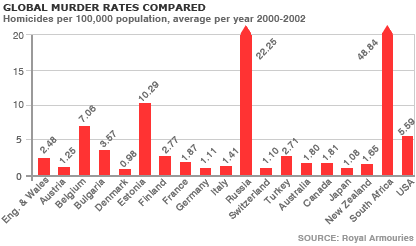
Another fascinating tidbit. At the bottom of that piece was this bit of rather old but interesting data:

Note the date – 2000-2002. That makes the ratio between the UK and the US right at 2.25 to one. A far cry from where it was in the 1950’s, no?

By most rational measures, the UK doesn’t really have much of a firearm problem. They do, however, have a violent crime problem. And they have a firearm paranoia problem, as evidenced by this story illustrating the inability to differentiate between “violent and predatory” and “violent but protective”:

March without your guns, says mayor

A MAYOR sparked a row by asking soldiers to lay down their guns before marching in this Sunday’s Remembrance Day parade.

Chepstow town councillor Hilary Beach says the 1 Rifles Army regiment, based at nearby Beachley Barracks, should not carry their weapons during the ceremony because of the rising tide of gun crime across the country.

Veterans’ groups criticised her comments as “ridiculous”.

As well they should. But she’s the Mayor, and thought it was a good idea.

And here’s the inevitable result of that mindset when carried into the halls of power:

Jail term cut for ‘feral’ killers

Two Cheshire teenagers who terrorised a vulnerable man before beating him to death and throwing his body in a river, have had their life sentences cut.

Craig Dodd, aged 17, will now serve a minimum of three-and-a-half years in prison and Ryan Palin, 15, three years.

The pair were dubbed as “feral” when they were jailed for life for the manslaughter of Raymond Atherton, 40, in Warrington.

They beat and urinated on Mr Atherton before dumping him in the River Mersey.

Despite the severity of their crime, Lord Justice Rix overturned the life terms and replaced them with sentences of detention for public protection, giving each a minimum tariff to serve before parole can be considered.

Lord Justice Rix decided the sentencing judge at Warrington Crown Court had not been right to impose life sentences for the killing.

He said: “We think it was an error of principle to say that a discretionary sentence of detention for life should be imposed.”

But here’s the kicker:

The court heard Palin, of Grasmere Avenue, Orford, and Dodd, of Lisguard Close, Runcorn spent months systematically abusing the victim, who had severe learning difficulties, in a process they nicknamed ‘terroring’.

They regularly broke into his council flat on St Katherine’s Way, Howley, where they wrote graffiti on the walls, burnt his hair and daubed his face with paint.

On the night of his death in May 2006, the boys were seen by neighbours beating him with planks of wood until he bled.

(My emphasis.) I guess his neighbors should have honked their horns and jumped up and down.

This is what disarmament has done to the formerly Great Britain. This is the result of a society unable to differentiate between “violent and predatory” and “violent but protective.” This is what happens when the State denies its citizens the right to defend themselves, and abrogates its duty to protect them. This is what happens when a society journeys down the path of compelled helplessness.

And what was the mantra of the (not nearly a) Million Mom March?

England can do it. Australia can do it. So Can WE!

Not on my watch. Not ever.

Why the Left Believes the Media is “Right-Wing”.

From TalkLeft:

I am a Centrist. I believe the Democratic Party is a centrist Party. I wish the Democratic Party would fight for its centrist ideals. Like ending the the war in Iraq. Like not going to war in Iran. Like bringing balance to our tax system by reversing the extreme and radical Bush tax cuts. Like doing something about global warming. Like protecting equal rights for all Americans. Like protecting the right to choose. Like offering health care to all Americans. And so on. These Democratic principles stand in the center of American public opinion, held by a strong majority of Americans.

The Republican Party is an extreme party whose views are completely out of the mainstream of American thought. The views espoused by the GOP must be marginalized and beaten at every turn.

They’re “middle of the road,” we’re “extremists.”

And they really believe that.

The divide widens and deepens.

This One’s for All the Marbles.

Now we get to see what our Supreme Court is really made of.

As early as tomorrow, Tuesday, November 13, SCOTUS may announce its decision whether to hear D.C. v. Heller this term. No matter what, this case will define, I think, the Roberts Court. If they decide to hear the case, it will be the first time the Supreme Court has heard a case specifically on the Second Amendment since 1939. If they deny certiorari they will continue a tradition of dodging the question of just what that amendment protects that has lasted sixty-eight years.

The topic is the legal definition of these twenty-seven words:

A well regulated militia, being necessary to the security of a free state, the right of the people to keep and bear arms, shall not be infringed.

Do these twenty-seven words mean that government is prohibited from infringing on the individual right of citizens to possess and carry firearms, or do they mean only that the government has the power to form and arm militias? Or do they mean something else entirely?

The law firm of Gura & Possessky filed their brief in response to the City of Washington, D.C.’s petition for a writ of certiorari in the D.C. v. Heller (formerly Parker v. D.C.) case on October 4. Unlike most petitions by successful plaintiffs, it was a brief in favor of the Supreme Court hearing Washinton D.C.’s appeal.

It’s a thing of beauty, and hit every single point, with emphasis.

The petition states in its opening paragraphs:

The case is further suitable for review because the question it presents is quite narrow. Contrary to Petitioners’ tendentious formulation of the question presented in their petition, the question presented by this case is whether the Second Amendment secures an individual right to keep basic functional firearms, including ordinary handguns, within the home. In resolving that narrow, specific question, this Court need not decide the full extent of Second Amendment rights nor even determine the appropriate level of constitutional scrutiny for regulations that implicate the Second Amendment.

Shorn of the legalese, this means “you only have to decide on whether the Second Amendment protects an individual right or not. Nothing else.” This is the fundamental question upon which all other questions of “gun control” rests, and is best illustrated by the 1996 decision of the Ninth Circuit Court of Appeals that stripped all residents of that circuit (including your humble author) of their right to arms. That decision was Hickman v. Block, and here is (as I have characterized it before) the court’s exhaustively researched, deeply-considered, well thought-out reasoning behind their “collective rights” conclusion:

We follow our sister circuits in holding that the Second Amendment is a right held by the states, and does not protect the possession of a weapon by a private citizen. We conclude that Hickman can show no legal injury, and therefore lacks standing to bring this action.

The Second Amendment is only twenty-seven words. With forty-eight, the Ninth Circuit rendered that amendment meaningless. That court later expanded on that holding in Nordyke v. King and Silveira v. Lockyer, concluding in that last case:

After conducting our analysis of the meaning of the words employed in the amendment’s two clauses, and the effect of their relationship to each other, we concluded that the language and structure of the amendment strongly support the collective rights view. The preamble establishes that the amendment’s purpose was to ensure the maintenance of effective state militias, and the amendment’s operative clause establishes that this objective was to be attained by preserving the right of the people to “bear arms” — to carry weapons in conjunction with their service in the militia. To resolve any remaining uncertainty, we carefully examined the historical circumstances surrounding the adoption of the amendment.

Our review of the debates during the Constitutional Convention, the state ratifying conventions, and the First Congress, as well as the other historical materials we have discussed, confirmed what the text strongly suggested: that the amendment was adopted in order to protect the people from the threat of federal tyranny by preserving the right of the states to arm their militias. The proponents of the Second Amendment believed that only if the states retained that power could the existence of effective state militias — in which the people could exercise their right to “bear arms” — be ensured. The historical record makes it equally plain that the amendment was not adopted in order to afford rights to individuals with respect to private gun ownership or possession. Accordingly, we are persuaded that we were correct in Hickman that the collective rights view, rather than the individual rights models, reflects the proper interpretation of the Second Amendment.

Thus, we hold that the Second Amendment imposes no limitation on California’s ability to enact legislation regulating or prohibiting the possession or use of firearms, including dangerous weapons such as assault weapons. Plaintiffs lack standing to assert a Second Amendment claim, and their challenge to the Assault Weapons Control Act fails.

Ninth Circuit Judge Andrew J. Kleinfeld characterized that decision in his dissent when the case was denied an en banc rehearing:

I respectfully dissent from our order denying rehearing en banc. In so doing, I am expressing agreement with my colleague Judge Gould’s special concurrence in Nordyke v. King, and with the Fifth Circuit’s opinion in United States v. Emerson, both taking the position that the Second Amendment secures an individual, and not collective, right to keep and bear arms.

The panel opinion holds that the Second Amendment “imposes no limitation on California’s [or any other state’s] ability to enact legislation regulating or prohibiting the possession or use of firearms” and “does not confer an individual right to own or possess arms.” The panel opinion erases the Second Amendment from our Constitution as effectively as it can, by holding that no individual even has standing to challenge any law restricting firearm possession or use. This means that an individual cannot even get a case into court to raise the question. The panel’s theory is that “the Second Amendment affords only a collective right,” an odd deviation from the individualist philosophy of our Founders. The panel strikes a novel blow in favor of states’ rights, opining that “the amendment was not adopted to afford rights to individuals with respect to private gun ownership or possession,” but was instead “adopted to ensure that effective state militias would be maintained, thus preserving the people’s right to bear arms.” It is not clear from the opinion whom the states would sue or what such a suit would claim were they to try to enforce this right. The panel’s protection of what it calls the “people’s right to bear arms” protects that “right” in the same fictional sense as the “people’s” rights are protected in a “people’s democratic republic.”

Our circuit law regarding the Second Amendment squarely conflicts with that of the Fifth Circuit. It is inconsistent with decisions of the Supreme Court that have construed the Second Amendment and phrases within it. Our circuit has effectively repealed the Second Amendment without the democratic protection of the amendment process, which Article V requires.

Judge Alex Kozinski in his dissent to that same decision put it more bluntly:

Judges know very well how to read the Constitution broadly when they are sympathetic to the right being asserted. We have held, without much ado, that “speech, or . . . the press” also means the Internet…and that “persons, houses, papers, and effects” also means public telephone booths….When a particular right comports especially well with our notions of good social policy, we build magnificent legal edifices on elliptical constitutional phrases – or even the white spaces between lines of constitutional text. But, as the panel amply demonstrates, when we’re none too keen on a particular constitutional guarantee, we can be equally ingenious in burying language that is incontrovertibly there.

It is wrong to use some constitutional provisions as springboards for major social change while treating others like senile relatives to be cooped up in a nursing home until they quit annoying us. As guardians of the Constitution, we must be consistent in interpreting its provisions. If we adopt a jurisprudence sympathetic to individual rights, we must give broad compass to all constitutional provisions that protect individuals from tyranny. If we take a more statist approach, we must give all such provisions narrow scope. Expanding some to gargantuan proportions while discarding others like a crumpled gum wrapper is not faithfully applying the Constitution; its using our power as federal judges to constitutionalize our personal preferences.

The able judges of the panel majority are usually very sympathetic to individual rights, but they have succumbed to the temptation to pick and choose. Had they brought the same generous approach to the Second Amendment that they routinely bring to the First, Fourth and selected portions of the Fifth, they would have had no trouble finding an individual right to bear arms.

Kleinfeld continues in his dissent:

Much of the panel decision purports to be an attempt to figure out what the word “militia” means in the Second Amendment. But the panel’s failure to cite the contemporaneous implementing statute defining the term demonstrates the tendentiousness of its analysis. The statute defining the militia, which in substance provides that the “militia” consists of all adult male citizens without regard to whether they are in any state or federal military service, has been subsequently altered to expand its coverage, but the federal militia statute remains in effect. Besides overlooking the statute, the panel somehow failed to notice that the United States Supreme Court, in United States v. Miller, held that the term “militia” in the Second Amendment meant, and means, “all males physically capable of acting in concert for the common defense.” We are an inferior court, bound by this holding of the Supreme Court.

The panel opinion swims against a rising tide of legal scholarship to the contrary, relying heavily on a single law review article that claims “keep and bear” means the same thing as “bear,” which itself means only to carry arms as part of a military unit.

About twenty percent of the American population, those who live in the Ninth Circuit, have lost one of the ten amendments in the Bill of Rights. And, the methodology used to take away the right threatens the rest of the Constitution. The most extraordinary step taken by the panel opinion is to read the frequently used Constitutional phrase, “the people,” as conferring rights only upon collectives, not individuals. There is no logical boundary to this misreading, so it threatens all the rights the Constitution guarantees to “the people,” including those having nothing to do with guns. I cannot imagine the judges on the panel similarly repealing the Fourth Amendment’s protection of the right of “the people” to be secure against unreasonable searches and seizures, or the right of “the people” to freedom of assembly, but times and personnel change, so that this right and all the other rights of “the people” are jeopardized by planting this weed in our Constitutional garden.

After several pages indicating point-by-point where the majority deluded themselves, Judge Kleinfeld concludes his dissent:

Congress and the states may enact reasonable restrictions to manage the ways in which the populace exercises its right to keep and bear arms, just as reasonable restrictions are imposed on our rights to free speech, free assembly, freedom from search and seizure, and all our other constitutional rights. What the Second Amendment prohibits is not reasonable regulation consistent with its purposes, but disarmament of the people. Where the Constitution establishes a right of the people, no organ of the government, including the courts, can legitimately take that right away from the people. All of our rights, every one of them, may become impediments to the efficient functioning of our government and our society from time to time, but fortunately they are locked in by the Constitution against permanent loss because of temporary impediments. The courts should enforce our individual rights guaranteed by our Constitution, not erase them.

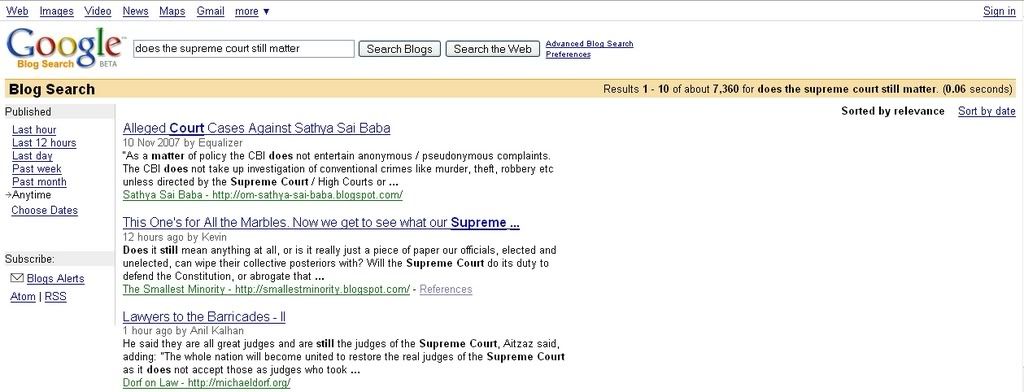
What is at stake here, essentially, is the tattered remnants of the Constitution. Does it still mean anything at all, or is it really just a piece of paper our officials, elected and unelected, can wipe their collective posteriors with? Will the Supreme Court do its duty to defend the Constitution, or abrogate that duty in such a way as to remove any doubt?

The First Amendment declaration “Congress shall make no law… abridging the freedom of speech….” was violated by the McCain-Feingold Incumbent Protection Campaign Finance Reform Act – and while some of the language was struck down by the Supreme Court, not all of it was. Fourth Amendment protections against unreasonable search and seizure, and its restrictions on the issuance of and wording of warrants have been shredded by the unending “War on (some) Drugs™” along with the Fifth Amendment’s prohibition against deprivation of property without due process. The Fifth has been further pulped by decisions rendering the “public use” clause moot. And the Tenth Amendment?

Let’s not go there.

Oh, and Silveira v. Lockyer? The Supreme Court denied cert. in 2003 and let that weed grow and flower in our Constitutional garden.

The Court’s composition has changed. It only takes four Justices to grant cert. Those four could very easily be Roberts, Alito, Scalia, and Thomas. This leaves five other justices, just one of which needs to understand his or her guardianship of the Constitution, to be unwilling to discard like a crumpled gum wrapper a fundamental enumerated right, to make it plain that the Constitution is not a relic, that it is not a “living document” to be redefined to mean anything judges sitting on a bench decide it means, whenever they so please.

So we will see.

This one is for all the marbles.

UPDATE: No announcement today, according to SCOTUSblog. The next case announcement will probably be Nov. 26.

So we just wait….

Quote of the Day.

I for one plan to avoid death when offered the option. I’ve looked into this “aging” thing you kids seem so crazy about these days. Turns out, there isn’t really much to recommend it. So I’ve given it a pass.

I have “top people” working on a full-body android prosthesis.

An abomination you say?

Well, I shall feel the sting of your moral outrage…for thousands of years…from the deck of my own personal starship…whilst getting wicked sick at Halo 3.

Immortality loses it’s Twilight Zonish sting in the face of modern gaming technology. – Hunter Cressall

I wish.

A Girl’s Guide to Firearms

An interesting piece at CO-ED Magazine, by that same title. Excerpts:

I could have cared less about firing a gun.

Growing up, even on the mean streets of New Jersey, I had never even seen a gun, fire arm, pistol, or whatever you want to call it except for television and movies. It wasn’t that my family was against weapons or the right to bare(sic) arms, we just didn’t bare arms. So when it came time to act interested, I had to do just that: ACT.

But being familiar with fire arms and pistols is something that is very important and every woman should know. Not only can it be thrilling to fire a gun but it is also very empowering.

(Emphasis mine.)

Together, we’ve gone to the range often. To find a range near you look here. Honestly, it surprises me to say, but I am even considering buying a gun myself. To see the laws in your state look here. In some states it takes a long time to buy a gun, which can be good or bad.

Something probably needs to change since there are so many nut cases carrying guns on college campuses these days. Still, as much as the government wants us to feel safe, I think I would definitely feel safer if I had a gun like Dirty Harry. I sit in my classes, and in the back of my mind, I think of how I am going to get out of the room if I hear shots from the hallway.

I’ve actually contemplated taking classes only on the first floor so I have a quick getaway. I’m not saying that I would want to carry a gun with me to class but at least if the campus security carried something other then a flashlight and a cup of coffee, I might feel safer. I don’t think I’m alone or crazy in my thoughts, but even if I am so what, I don’t think it is too much to have an expectation of making it safely through my classes each day.

RTWT.

Education. Isn’t it wonderful?

Bleg for a Good Cause II

(A repost this Veteran’s Day. Project Valour-IT is well below their target of $240,000. Please chip in whatever you an afford.)

Back on Memorial Day I put up a list of worthy charities and invited you to contribute to whatever charity met your particular criteria. I chose Soldier’s Angels, based on what I’d heard and read about them. I’m glad I did.

The guest of honor at this year’s Gunblogger’s Rendezvous was Maj. Chuck Ziegenfuss. Major (then Capt.) Ziegenfuss was commander of Charlie Company, 2nd Battalion, 34th Armor in Iraq when he was the victim of an IED in June of 2005. The Major was also a blogger, and still is, running From My Position… On the Way!, so many of us knew about his story, but not much of the details. After our dinner, Maj. Ziegenfuss gave us those details of his experience of being essentially blown to pieces by a buried 80mm mortar round, the reaction of his men, the trip home, and the ongoing recovery from his injuries. I am not going to relate it here, because that’s not what this post is about.

This post is about Soldier’s Angels and Project Valour-IT.

When Chuck woke up in Walter Reed, a woman was in his room, a woman that was not his wife. A woman that he didn’t know. That woman was Kathleen Bair, a Soldier’s Angels volunteer who made sure that someone was with him when he woke up, and that someone stayed with him until his wife could arrive. Kathleen did anything she was asked within the realm of possibility – no forms to fill out, no red tape, no idiotic questions. When Chuck said that he’d like to have a laptop so he could continue blogging, Kathleen called him from her home that night. She was on eBay, bidding on a used laptop. Would the unit she was bidding on meet his needs?

As Chuck explained, he was loaded to the eyeballs on painkillers at the time. Anything sounded fine. As it turned out, the laptop was fine. It was Chuck that out of spec. As he explained it, the explosion had mangled his left hand, severing his pinky finger and damaging nerves. His right hand had been shielded from the blast, mostly, by his M4 carbine, but that thumb had been blown off and lodged in his thigh. The reattachment surgery had gone well, but he had only one functioning finger at the time. This brought “hunt and peck” to an entirely new level.

Chuck knew about Dragon Naturally Speaking speech-recognition software, and asked his readers – slowly and painstakingly – for a copy. He got one overnight via his Amazon.com wishlist. A few minutes spent loading and then “training” the software to his voice, and he was high-speed, low-drag blogging again.

As he explained during is talk to us, that’s when inspiration struck. How many people actually write anymore? During WWII, Korea, even Vietnam, “candy-stripers” or Red Cross volunteers used to go around VA hospitals to write letters for wounded soldiers by dictation. Not any more. And when was the last time a soldier actually wrote a letter on paper? The media was electronic now. Email, instant-messaging, blogging, chatrooms, bulletin boards were all the ways the modern soldier communicated with friends and family. Something else Chuck noticed: when he was online, either reading or writing, he tended not to notice the pain of his injuries. He even asked to have the level of his medication reduced so that it didn’t affect his mental state as much.

There is, he explained, a fine line between “enough” pain meds and “too much.” Too much medication does keep the patient comfortable, but it slows the healing process. Too little medication leaves the patient in such pain that again, healing is slowed. But when all you have to do is lay in bed and watch four channels of bad TV or read a six-month old magazine for the fifth time, your pain tends to occupy your thoughts.

But not when your mind is engaged in something interesting.

Chuck’s epiphany was that there must be other soldiers – many of them – injured like he was who could use a laptop with speech-recognition software to access the internet. He discussed it with Kathleen Bair and another blogger he corresponded with, and Project Valour-IT was born as a subsidiary of Soldier’s Angels. The project recently gave out its 2,000th laptop. Through the donations of just the few of us who came to the Rendezvous, we collected enough money to provide another laptop for an injured soldier.

So here’s the deal: Last year a competition was put on to raise money for this very worthy cause. Money was raised in the name of each of the branches of the armed forces, though the money all goes in the same pot, and it makes no difference which branch a wounded soldier belongs to when it comes to receiving a laptop. It’s strictly for bragging rights.

The competition for this year is now open. The target for each branch is $60k, and the first one to meet it, wins.

(BTW, the Navy won last year.)

Project Valour-IT isn’t going to get a $1.4m windfall from Rush Limbaugh, and I doubt seriously Harry Reid will try to polish his reputation by being a donor, but I’m asking my readers to pony up whatever they can spare. This is a tax-deductible donation to a cause you know is good, and to a cause where 70% of the money you give isn’t used to cover “overhead.”

Since I got back from the Rendezvous I put up a Soldier’s Angels link on the sidebar. Tonight I’m adding a Project Valour-IT link as well.

If you support the troops, please help support these troops.

UPDATE: Excellent post on the fundraiser competition at Argghhh!