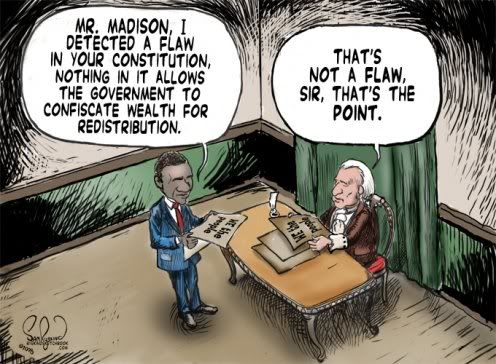
A Good Question

A Good Question

Reader DJ comments:

Way back in October of 1995, my wife and I attended a trade show in Paris. What is relevant about that trip is an event that happened on the way back.

We flew back on a TWA L-1011 from Paris to JFK in New York. We sat in seats 1 and 2 in row 53, in that small section of about ten rows all the way in the back. That little section of about 90 or so seats was filled with Russian immigrants. My nose told me emphatically that their trip, so far, had been a long one, and we had a long way yet to go.

Right across the aisle sat what appeared to be a middle aged couple traveling with a granddaughter about five years old. The were a stereotype right out of Life magazine. He appeared to have worked hard, his faced burned by the sun and frozen by the wind, and her cheeks a bright red as they peeked around the kerchief that was knotted beneath her chin. He was wearing a well worn tweed suit coat that might have fit about 25 pounds ago, and she was wearing a cotton dress over her dumpy frame that was more patches than original fabric. She carried the child while he carried a small bundle of boxes that were neatly stacked and carefully tied together with a ribbon.

What made it memorable was what happened as they took their seats in all the hubbub and confusion of immigrants who don’t speak the language of air travel. She picked up the child and sidled into their seats, after which he slid into his seat next to them and on the other side of the aisle from me. They sat down, stowed their bundle, and got the child belted in.

Then, when all was ready for flight, he squared his shoulders and took a deep breath. Then he let it out and slowly, ever so slowly, slumped forward until his forehead was against the top of the seat back in front of him. Then I noticed his eyes were closed and his hands were shaking. He sat there, slumped over, his hands still shaking, for a full two minutes. Then he slowly straightened, leaned back, and I noticed tears in his eyes and hers.

What had they been through to get where they were?

I’d have given a month’s pay to know his thoughts at that point, but I didn’t intrude. As the flight progressed, it became apparent that they didn’t speak English, only Russian.

That was thirteen years ago. I can’t help but wonder what these people think of Obama. I have thought of them often as more and more of the reality of Obama has come to light.

Do you suppose they’ll defend the freedom they came so far to find?

I think I know the answer Mrs. Ly Chho would give.

Quote of the Day

On Professor Brian Anse Patrick’s “Administrative Control Bias” of the media:

This time around I think it’s more than just the usual MSM leftward bias. What the Brits may not have noticed is that the MSM actually has a vested self-interest in Obama winning this thing. After all, it won’t be long before the MSM will join Wall Street and General Motors at the edge of the abyss and in desperate need of a bailout (and in the MSM’s case, coupled with additional protection in the form of Fairness Doctrine v2.0). It’s not hard to see which candidate, should he win on Tuesday, is most likely to go along with this. – “Joshua” in a comment to Presidential Media Bias as Seen from Across the Pond.

Hmm. . . Fits all the available facts.

Presidential Media Bias as Viewed from Across the Pond

In relation to yesterday’s post, here’s something in a similar vein from the UK’s Guardian:

Mad about The One
The US media have been captivated by Obama, at the expense of their curiosity and scepticism

Harold Evans, Saturday, Nov. 1, 2008

It’s fitting that the cynicism “vote early and vote often” is commonly attributed to Chicago’s Democratic boss, mayor Richard Daley, who famously voted the graveyards in 1960 to help put John Kennedy in the White House. In this 2008 race, it’s the American media that have voted very early and often. They long ago elected the star graduate of Chicago’s Democratic machine, Barack Obama.

I am not talking of editorials in newspapers, though Obama has the preponderance of the endorsements over John McCain. Obama certainly deserves the credit for recruiting impressive advisers and running a more efficient campaign machine than any one in the US’s political history.

What’s troubling to anyone old-fashioned enough to care about standards in journalism is the news coverage in mainstream media. Forget the old notions of objectivity, fairness, thoroughness, and so on. The nastiest rumours on both sides haven’t been published, but the coverage has been slavishly on the side of “the one”.

It has not just been anti-Republican. It goes without saying that after eight years of George Bush’s macho blunders, the disenchantment of even the conservative outlets was bound to show. Researchers at the Project for Excellence in Journalism report that in the six weeks since the Republican convention, McCain, once the darling of the media, got four times as many negative stories as positive ones. Meanwhile, Obama got twice as many positive stories as McCain. The website Politico has also acknowledged that it had loaded the dice against McCain: 100 stories were more favourable to Obama than McCain; 69 were the opposite.

But the press bias towards Obama doesn’t represent a simple revulsion for the Republican party. It was on display in the Democratic primaries with the persecution of Hillary Clinton. Worst of all, in the primaries, the press let the Obama campaign get away with continuous insinuations below the radar that the Clintons were race-baiters. Instead of exposing that absurd defamation for what it was – a nasty smear – the media sedulously propagated it.

Clinton made the historically correct and uncontroversial remark that civil rights legislation came about from a fusion of the dreams of Dr Martin Luther King and the legislative follow-through by President Lyndon Johnson. The New York Times misrepresented that as a disparagement of King, twisting her remarks to imply that “a black man needed the help of a white man to effect change”. This was one of a number of manipulations on race by the Obama campaign, amply documented by the leading Democratic historian, Princeton’s Sean Wilentz. Clinton came close to tears in a coffee shop in Portsmouth, New Hampshire, which many thought helped her to win an upset victory there. MSNBC television gave a platform to the Chicago congressmen, Jesse Jackson Jr, where he questioned her tears and claimed that she’d not shed any tears for the black victims of Katrina, and that she’d pay for that in the South Carolina primary, where 45% of the electorate would be African-Americans.

In fact, MSNBC ran a non-stop campaign for Obama propelled by the misogyny of its anchors, Chris Matthews, Keith Olbermann and David Shuster. Chelsea Clinton joining Clinton’s campaign prompted Shuster to report she was “pimping” for her mother.

Obamania has not been deflated one bit by the non-stop talkers on rightwing radio. They offer vituperation in place of enlightenment; paranoia in place of policies, and as such have little influence with the crucial independents.

On the web, the rightwing Drudge Report highlights anything that favours McCain, the Huffington Post does the same for Obama, and the more independent Slate has said only one of its staff intends to vote for McCain, the other 55 for Obama. Fox News has the vehement Sean Hannity paired with the mildly liberal Alan Colmes, (mildly liberal?) not a fair match, but it has been more willing to investigate than CNN. In the Democratic primaries, there was a pattern on CNN where the short news videos of Clinton rarely let you hear what she was saying, but the short news videos of Obama let his words come through. I mentioned this to a CNN editor who said, “Oh, that’s our young video editors, they just find Obama more exciting.”

The young and affluent liberals have been captivated by Obama’s charisma, the unstated notion that electing a black man will be absolution for the years of discrimination and prejudice, and the expectation that Obama’s undoubted appeal to the outside world will repair America’s image. All understandable, but these emotions have been allowed to swamp the commonplace imperatives of journalism: curiosity and scepticism.

All the mainstream national outlets were extraordinarily slow to check Obama’s background. And until it became inescapable because of a video rant, they wouldn’t investigate the Reverend Jeremiah Wright connection for fear of being accused of racism. They wouldn’t explore Obama’s dealing with the corrupt, now convicted, Chicago businessman Tony Rezko. They haven’t investigated Obama’s pledge to get rid of the secret ballot in trade union affairs. After years of inveighing against “money in politics”, they’ve tolerated his breach of the pledge to restrict himself to public financing as McCain has done (to his cost). Now the LA Times refuses to release a possibly compromising video, which shows Obama praising Palestinian activist Rashid Khalidi at a 2003 banquet, saying its promises to its source prevent it from doing so.

The British press is notorious for political distortions, which more or less balance out. But the American press likes to think of itself as more superior and detached than it actually is. In 2000, the mainstream media did a great deal to elect George Bush by portraying Al Gore as a boastful liar.

Let’s hope the consequences of electing “the one” will be as wondrous as the press has led the voters to believe.

Let’s rather hope that “the one’s” loss will be seen (among other things) as repudiation of the press’s manipulation.

I received the link to this piece from journalism professor Edward Wasserman, with whom I had a short exchange back in 2004, after I sent him an email about the Malone ABC piece. Hopefully in the not-too-distant future, I’ll have a post up concerning a new exchange.

Gun Sales

Gun Sales

Tam points to a story on “Gun Sales Thriving in Uncertain Times” in the WaPo with this comment:

Say what you will about Barry…
…but the man’s an even better gun salesman than Hils.

In the last 30 days (actually less) I’ve purchased a T/C Encore frame, ordered an assembled Bushmaster AR-15 lower (less buttstock), and going in the mail today is an order for a custom M14 to Ted Brown.

I’m also buying other stuff – reloading supplies, etc. (I purchased 11 20-round magazines for the M14 already, even though I won’t have the rifle for months.) One thing I’ve noticed when I go into Sportsman’s Warehouse or Murphy’s guns (especially Murphy’s) is that the gun counter is crowded. Murphy’s parking lot just isn’t big enough and hasn’t been for a while. So the WaPo’s observations are accurate even here in flyover country. Perhaps especially here in flyover country.

Philosophy, Revolution, and the Restoration of the Constitution

(*sigh*)

Vanderboegh is at it again.

Oldsmoblogger is convinced that Mike Vanderboegh is the Thomas Paine of modern times. I’m not so sure.

He’s not shy, though.

The latest excrement-storm stems from an op-ed penned by Jeff Knox, or “Knox the Younger” as characterized by Mr. Vanderboegh. That op-ed, entitled “Mutual Assured Destruction” spells out the situation as Knox the Younger sees it. I’ll excerpt, but you really should read the whole thing:

Don’t expect average Americans to rise up in revolution because the government is playing fast and loose with the Bill of Rights or because taxes get too high. That’s not the way modern Americans think, nor is it the way the world works today. Armed revolt in America would not lead to a renaissance of Jeffersonian liberalism; it would lead to the destruction of our nation and the guarantee that whatever replaced it would be worse than what it replaced.

Like nuclear deterrence, it is the threat that saves the world, not the execution.

—

While this is all accurate and works well on paper, just like Marxism and Amway networks, the whole thing falls apart in practice because people never do what you want them to do or what they ought to do – even when doing so is clearly in their own best interests. During the Revolutionary war, a full 40 to 45% of Americans actively supported the revolt. Today, less than 6% of gunowners are even minimally active in political activism. Gunowners turn out for elections at about the same rate as the non-gun owning public.

If gunowners and supporters of liberty can’t even agree on a presidential candidate, what makes any of them think that they will be able to agree on a revolution? The threat of armed revolt must be maintained, but like the mutual assured destruction of nuclear war, its implementation must be avoided at all costs. If we have the numbers and the commitment to win a revolution then we should easily be able to win an election.

Mr. Vanderboegh of course disagrees. His piece is printed at Western Rifle Shooters Association and is entitled “An Open Letter to Jeff Knox: Destruction? Yes. Mutually Assured? No!” Again, read the whole thing (I’ll be saying a lot of that), but here’s some pertinent excerpts:

“Armed revolt” will come about because the leviathan will one day pick on the wrong guy, and a large number of them will be killed by this one guy. They will be shocked, they will be horrified and they will want blood. This individual case of resistance will cause a violent reaction on their part, lead to more onerous laws, confiscation, etc., which in turn will lead to even more incidents, and again, and again, until you get your “Red Dawn” or the ATF equivalent of it. As to whether it would lead to the destruction of our nation or the restoration of our republic is a matter of military argument. Don’t wave your white flag just yet – you might be embarrassed.

—

(Y)ou’re saying we have the ability but not the will. If we begin shooting, won’t we run out of targets before they will? Oh, I forgot, you and yours aren’t going to come to the party, so sad. One other thing. We’re not talking about nuclear weapons, Jeff, we’re talking about aimed rifle shots. Nothing indiscriminate about that. Which ought to make the gun-grabbers even more queasy, unless of course they’re falsely reassured by your cowardly pap. One wonders indeed which audience you are writing this for.

—

We don’t even need 6%. All we need is 3% — less than that really — to provoke the response that forces you, Knox the Younger, and your ilk to submit, or fight.

—

You fool. You don’t have to agree with us. In fact, we’re counting on your type folding at the first shock. People don’t AGREE on revolution, they are FORCED into it by events. And there are enough of my kind, the three percent, to create the events. Have you learned nothing from history? It is made by determined minorities. We may be a minority but we are determined. If you want to hang onto ANY of your guns or other liberties, you will HAVE to fight. We will make sure of that.

It goes on like that.

Knox responded in another piece entitled “Philosophical Wars.” (Yes, read the whole thing.) Excerpt:

It is mind boggling to me that intelligent people could be so short sighted and misguided as to think that killing people and blowing things up is somehow going to make things better for our grandchildren. They seem to think that because only about 5% of the populace supported the idea of seceding from the English Empire back in 1776, that their “magic number” is 3% and they think they have that because some survey suggested that 3% of the population thinks violence against the government is justified or could be justified today. What they fail to take into account is the “bluster factor” of people who will agree with such a statement, but who don’t really mean it, and the radical other side – the people who support the terrorist tactics of the Animal Liberation Front and radical Leftists like Bernadine Dohrn and Bill Ayers.

What I want to know is, where are the Washingtons, Jeffersons, Adamses and Hancocks? Who do these Bozos think is going to lead the new America out of the ashes and back to its Constitutional glory, and why arent these giants running for public office and leading the political revolution? What do they think China, Russia, Iran, Cuba, Venezuela, and North Korea are going to be doing while their merry little band of terrorists is busy crippling our nation and trying to foment rebellion? What exactly do they expect the “end” of their rebellion to look like? How are our children and grandchildren going to be better off?

Revolution is like cannibalism; it can be justified, but only when there is absolutely no other choice for survival.

And, of course, Vanderboegh rebutted, in a piece he titled “Reply to Knox the Younger.” (You know the drill by now.)

The first sentence of his counterpoint deliberately mischaracterizes the reality we face. I say deliberately because he is otherwise a reasonably intelligent chip off the old Knox. (And I daresay that if his daddy ain’t rolling over in his grave, he is at least restive at his son’s latest foray.)

—

The predicate for armed conflict in this country will be made not by us, but by our would-be tyrants, who will pass more laws stealing our traditional liberties and seizing our property. It will be our enemies who, having read Knox’s soothing missive, ‘Let’s get real, no one’s going to resist the Leviathan,’ will take it as evidence — a professional opinion from ‘one of them’ — that they can plunder us and, if necessary, kill us, without risk of retaliatory violence.

—

Knox spends much of his rebuttal belittling the number who he thinks would resist. Again, he offers no statistics, merely gratuitous opinions which may be as easily refuted.

Who indeed cares what the real number would be? It would still be enough.

He should recall how many cops tried to find the DC snipers – two mokes who were not very bright, had no support network, and a one-trick pony MO. They still managed to freeze the DC area for what, how many weeks? More then a month wasn’t it? Two morons — with the entire resources of the federal government and the local police looking for them, it was just two morons.

But why would the Leviathan go down this path in the first place?

BECAUSE THE JEFF KNOX’S OF THIS COUNTRY HAVE ALREADY TOLD THEM THEY CAN, THAT NO ONE WILL RESIST, THAT NO ONE SHOULD RESIST.

It is at this next excerpt that I will start commenting:

Knox asks what our traditional enemies will be doing when the three percent (who he calls “terrorists”) are “busy crippling our nation and trying to foment rebellion?”

I reject the notion that it will be we who will cripple our nation and foment rebellion. He has us confused with the Leviathan. This decision is entirely up to our would-be oppressors. Of course our enemies will take advantage of such a situation. All the more reason why the Leviathan should not push us into this corner.

Vanderboegh may reject the notion of placing the blame, but he cannot reject the reality of the fact that he just described the crippling of our nation in the face of our foes.

Next excerpt:

Then Knox asks, “What exactly do they expect the ‘end’ of their rebellion to look like?”

Gee, I don’t know. Maybe the country I grew up in without the stain of segregation and racial discrimination?

Once they start this dance, if they want to get out of it with their lives, the Leviathan will have to dial back to a time when they didn’t control so much of our lives. It’s either that or they lose their lives. Which way do you think they’ll vote when they understand that?

Knox next criticizes us for advocating “revolution”, when it is really Restoration that we are seeking. We want the constitutional republic of the Founders back. We want it restored.

It is the collectivists who have infested and infected every corner of our government with the statism and corruption of their nanny regime.

They are the revolutionists.

They are the cannibals.

And now it’s my turn.

One quote I like very much is this one by Ambrose Bierce:

Revolution is an abrupt change in the form of misgovernment.

The number of “successful” revolutions – ones that accomplished their stated intents and actually brought liberty and freedom to the oppressed can be counted on one hand with fingers left over.

Here’s another quote, this time by Alexander Solzhenitsyn:

In a state of psychological weakness, weapons become a burden for the capitulating side. To defend oneself, one must also be ready to die; there is little such readiness in a society raised in the cult of material well-being. Nothing is left, then, but concessions, attempts to gain time and betrayal.

Jeff Knox described that “cult of material well-being” in a line from his first piece:

The fact is that only those who have nothing to lose (and nothing to live for) are willing to give up everything – including their lives – in a symbolic gesture of defiance. The rest of us, those with families – kids, grand-kids, vulnerable parents – and homes, jobs, and lives, are not interested in ditching the house, refrigerator, and HD-TV in exchange for a prison cell or a mountain cave.

That’s part of it, but it’s the symptom, not the disease.

Vanderboegh is convinced that his 3% can drag – perhaps kicking and screaming, but drag – a significant (and, more importanty, sufficient) portion of the population into the fray in support of the 3%.

I’m not so certain. In fact, I’m severely doubtful.

Here’s why.

It all goes back to philosophy. Billy Beck has pulled his hair out over the topic:

(Y)ou people are talking about blowing the place up, whether you know it or not. That’s the only way it can go, as things are now, because there is no philosophy at the bottom of what you’re talking about.

Neither Knox nor Vanderboegh addresses the subject directly.

We’re in an ideological war, once described thus:

The heart of the conflict is between those to whom personal liberty is important, and those to whom liberty is not only inconsequential, but to whom personal liberty is a deadly threat.

Vanderboegh dismisses Knox’s objections with respect to voting:

Knox also condemns us us for talking “revolution” but not “actively and diligently working hard every day to elect quality people to office at every level and to educate the elected officials already in office about their core responsibilities.”

What does he think we’ve been doing these past twenty years of more? Does he think we just jumped into this thing and started threatening people?

I was doing political work on behalf of the Second Amendment when Jeff Knox hadn’t sprouted short and curlies. The real question is how long do we continue to labor in those fields when the collectivists keep dumping Agent Orange on our work?

We have sacrificed in the political arena, we have fought and spent and argued ourselves half to death with the struggle.

And yet – here we stand today on the precipice.

And why? Because one philosophy has predominated in this country over the last 100 years. Vanderboegh also wrote:

The Constitution is a piece of paper if its spirit does not live in the hearts of men. If it is despised, disregarded and prostituted against the Founder’s intent, then it is so much toilet paper.

Indeed. And that’s very much what it has become – because the philosophy of the Founders has been replaced.

And revolution won’t restore it.

I hate to say it, but I think Ambrose Bierce was right. And Billy Beck’s prediction of “The Endarkenment” is pretty much the way it’s going to go.

Reader Mastiff left a comment here not too long back:

To win this fight, we need to reform the institutional structure of government–create structural incentives for specific actors in government to want to defend our freedom. Otherwise, in a long-running fight between a government that wants to expand its own power and a populace that doesn’t know what it wants, the government will win.

Gramsci works both ways. If in the space of a hundred years, an ideology alien to our traditional mode of politics was able to dominate our intellectual class, there is nothing stopping that process from working in reverse. IF people settle in for the long haul and start laying the groundwork.

Unfortunately, the Publick Edumacation Sistim stands athwart any effort to reverse Gramsci.

And the Endarkenment Approacheth, in part because – 3% or not – there’s a bunch of people who will not go gently into that good night, and have the means and the will to make it painful. Whatever results will not be “the country I grew up in without the stain of segregation and racial discrimination.”

UPDATE: David Codrea commented on the kerfuffle first.

UPDATE: William comments.

UPDATE: Oldsmoblogger comes out of hiatus and comments as well.

But, but, the Evil KKKorporate Media is RIGHT WING!

(h/t to Phelps.)

First there was CBS’s Bernie Goldberg. Then Dr. Bob Arnot of NBC. Now ABC’s Michael Malone:

The sheer bias in the print and television coverage of this election campaign is not just bewildering, but appalling. And over the last few months I’ve found myself slowly moving from shaking my head at the obvious one-sided reporting, to actually shouting at the screen of my television and my laptop computer.

But worst of all, for the last couple weeks, I’ve begun — for the first time in my adult life — to be embarrassed to admit what I do for a living. A few days ago, when asked by a new acquaintance what I did for a living, I replied that I was “a writer,” because I couldn’t bring myself to admit to a stranger that I’m a journalist.

Read the whole thing.

Of course the commenters are accusing Malone of being a Republican.

Still, the one thing I noted in Malone’s piece was the absence of any mention of the same bias shown by the media in 2004. Oh, not to the same degree, certainly, but there was definitely a pro-Kerry media bias. In fact, I had a short exchange with Journalism Professor Ed Wasserman of Washington and Lee University about it that September. Apparently 2004 was a practice-run for 2008.

And You Can Walk on Water, Too!

If you’re not too lazy to get off the couch. Bob Parks has found perhaps the definitive example of the stereotypical Obama supporter:

[youtube https://www.youtube.com/watch?v=381gFG4Crr8&color1=0xb1b1b1&color2=0xcfcfcf&hl=en&fs=1&w=425&h=344]

I never thought this day would ever happen. I won’t have to worry ’bout puttin’ gas in my car. I won’t have to worry ’bout payin’ my mortgage.

Yeah, I never thought this day would happen either. Guess I’ll be puttin’ gas in your car and payin’ your mortgage.

Oh, wait . . . I don’t make $250k a year. Or is it $150k. Or $100k.

(Edited to correct transcript error.)

UPDATE:  The original JS-Kit/Echo comment thread for this post is available here, thanks to the work of reader John Hardin.

Noonan’s Response

Peggy Noonan has her own web page, unsurprisingly enough, and several days ago I made use of her contact page to ask her a question. It says right on the contact page:

(O)wing to the amount of spam I have received in the past, messages are not forwarded to me until they have been reviewed. That generally results in a delay of a day or two before I see the message.

I imagine she’s received a flood of mail since she endorsed Obama, so I’m not all that surprised that my little missive has apparently not reached her notice.

I didn’t save it, but I remember the gist of it. It was, after all, a variation of the one I sent to Rev. Donald Sensing. In Ms. Noonan’s case, the piece she wrote was Oct. 27th, 2005’s A Separate Peace, which inspired my essay, Tough History Coming. I quoted from her column:

Do people fear the wheels are coming off the trolley? Is this fear widespread? A few weeks ago I was reading Christopher Lawford’s lovely, candid and affectionate remembrance of growing up in a particular time and place with a particular family, the Kennedys, circa roughly 1950-2000. It’s called “Symptoms of Withdrawal.” At the end he quotes his Uncle Teddy. Christopher, Ted Kennedy and a few family members had gathered one night and were having a drink in Mr. Lawford’s mother’s apartment in Manhattan. Teddy was expansive. If he hadn’t gone into politics he would have been an opera singer, he told them, and visited small Italian villages and had pasta every day for lunch. “Singing at la Scala in front of three thousand people throwing flowers at you. Then going out for dinner and having more pasta.” Everyone was laughing. Then, writes Mr. Lawford, Teddy “took a long, slow gulp of his vodka and tonic, thought for a moment, and changed tack. ‘I’m glad I’m not going to be around when you guys are my age.’ I asked him why, and he said, ‘Because when you guys are my age, the whole thing is going to fall apart.’ “

Mr. Lawford continued, “The statement hung there, suspended in the realm of ‘maybe we shouldn’t go there.’ Nobody wanted to touch it. After a few moments of heavy silence, my uncle moved on.”

Lawford thought his uncle might be referring to their family–that it might “fall apart.” But reading, one gets the strong impression Teddy Kennedy was not talking about his family but about . . . the whole ball of wax, the impossible nature of everything, the realities so daunting it seems the very system is off the tracks.

And–forgive me–I thought: If even Teddy knows . . .

I asked her, as I asked Rev. Sensing, if the intervening years had altered her opinion, and if so in what way.

But here’s an equally pertinent excerpt, the concluding paragraphs:

If I am right that trolley thoughts are out there, and even prevalent, how are people dealing with it on a daily basis?

I think those who haven’t noticed we’re living in a troubling time continue to operate each day with classic and constitutional American optimism intact. I think some of those who have a sense we’re in trouble are going through the motions, dealing with their own daily challenges.

And some–well, I will mention and end with America’s elites. Our recent debate about elites has had to do with whether opposition to Harriet Miers is elitist, but I don’t think that’s our elites’ problem.

This is. Our elites, our educated and successful professionals, are the ones who are supposed to dig us out and lead us. I refer specifically to the elites of journalism and politics, the elites of the Hill and at Foggy Bottom and the agencies, the elites of our state capitals, the rich and accomplished and successful of Washington, and elsewhere. I have a nagging sense, and think I have accurately observed, that many of these people have made a separate peace. That they’re living their lives and taking their pleasures and pursuing their agendas; that they’re going forward each day with the knowledge, which they hold more securely and with greater reason than nonelites, that the wheels are off the trolley and the trolley’s off the tracks, and with a conviction, a certainty, that there is nothing they can do about it.

I suspect that history, including great historical novelists of the future, will look back and see that many of our elites simply decided to enjoy their lives while they waited for the next chapter of trouble. And that they consciously, or unconsciously, took grim comfort in this thought: I got mine. Which is what the separate peace comes down to, “I got mine, you get yours.”

You’re a lobbyist or a senator or a cabinet chief, you’re an editor at a paper or a green-room schmoozer, you’re a doctor or lawyer or Indian chief, and you’re making your life a little fortress. That’s what I think a lot of the elites are up to.

Not all of course. There are a lot of people–I know them and so do you–trying to do work that helps, that will turn it around, that can make it better, that can save lives. They’re trying to keep the boat afloat. Or, I should say, get the trolley back on the tracks.

That’s what I think is going on with our elites. There are two groups. One has made a separate peace, and one is trying to keep the boat afloat. I suspect those in the latter group privately, in a place so private they don’t even express it to themselves, wonder if they’ll go down with the ship. Or into bad territory with the trolley.

I believe I have my answer. I think Ms. Noonan’s opinion hasn’t changed. She’s just found a group of elites she fervently hopes might possibly save the ship, put the trolley back on the tracks, ignoring the fact that the elites never do the actual work. It’s always left to Joe Six Pack. (Or Joe the Plumber.)

There’s a scene from Frank Herbert’s classic SF novel, Dune of a dinner party on the desert planet Arrakis where some rather delicate but vicious political maneuvering is going on. During the dinner conversation, Paul Atreides, the young hero of the novel (not at that point, though – that comes later) takes a political jab at one of the dinner guests himself:

“Once, on Caladan, I saw the body of a drowned fisherman recovered. He –“

“Drowned?” It was the stillsuit manufacturer’s daughter.

Paul hesitated, then: “Yes. Immersed in water until dead. Drowned.”

“What an interesting way to die,” she murmered.

Paul’s smile became brittle. He returned his attention to the banker. “The interesting thing about this man was the wounds on his shoulders — made by another fisherman’s claw-boots. The fisherman was one of several in a boat — a craft for traveling on water — that foundered . . . sank beneath the water. Another fisherman helping recover the body said he’d seen marks like this man’s wounds several times. They meant another fisherman tried to stand on this poor fellow’s shoulders in the attempt to reach the surface — to reach air.”

“Why is this interesting?” the banker asked.

“Because of an observation made by my father at the time. He said the drowning man who climbs on your shoulders to save himself is understandable — except when you see it happen in the drawing room.” Paul hesitated just long enough for the banker to see the point coming, then: “And, I should add, except when you see it at the dinner table.”

And, I would add, except when you see it in political punditry.