Seen around the web:
Nothing Says “Deplorable” like an NRA membership.
The Smallest Minority on earth is the individual. Those who deny individual rights cannot claim to be defenders of minorities. – Ayn Rand
Seen around the web:
Nothing Says “Deplorable” like an NRA membership.
So, the legislature of Missouri has overridden Gov. Nixon’s veto and Missouri is now a Constitutional Carry state – the eleventh. So far.
The Editorial Board of the New York Times is hyperventilating. Their op-ed today is entitled, “Missouri: The Shoot Me State.” I kid you not. Shades of Florida being tagged “The Gunshine State” when they passed shall-issue concealed carry in 1987. What happened there? Well between passage of that law and 2014 the homicide rate declined from 11.4/100k to 5.8, violent crime declined from about 7,500/100k to less than 3,500, rape declined from 50.2/100k to 30.4, and aggravated assault declined from 606.3 to 366.4.
“Gunshine State”? Missouri ought to embrace their new moniker.
As is typical for the Media when it comes to gun control, all they’ve got is lies and hyperbole, and this piece starts off with a bang (no pun intended):
The law will let citizens carry concealed weapons in public without a state gun permit, criminal background check or firearms training. It strips local law enforcement of its current authority to deny firearms to those guilty of domestic violence and to other high-risk individuals.
An earlier version of the piece used the phrase “necessary authority,” but that was changed with no notification of the edit.
The measure has drawn no great national attention,
Perhaps because ten other states have such laws on the books with no negative outcomes?
but it certainly provides further evidence that gun safety cannot be left to state lawmakers beholden to the gun lobby.
Otherwise known as “their constituents.”
Democrats opposed to the Missouri bill called it a “perfect storm” of lowered standards for the use of deadly force and an invitation for people to be armed without responsible controls. The measure was enacted by the Republicans, despite strong public opposition and warnings about the threat to public safety from the state Police Chiefs Association. Everytown for Gun Safety, one of the groups fighting the gun lobby, noted that stand your ground laws result in disproportionate harm to communities of color.
By that measure, “gun control” results in “disproportionate harm to communities of color,” since places like Chicago with strict gun control laws have astronomically high levels of death and injury by gunshot. Ask the writer of this recent Pro Publica piece, How the Gun Control Debate Ignores Black Lives. But continuing:
Mr. Nixon, a Democrat, vetoed the measure in June, saying it would allow individuals with a criminal record to legally carry a concealed firearm even though they had been, or would have been, denied a permit under the old law’s background check.
Which means he lied, since anyone with a felony record, or a conviction that could have resulted in a sentence exceeding one year (regardless of what sentence was actually handed down), or anyone under a domestic violence restraining order or found guilty of a domestic violence charge is – by Federal law – prohibited from possessing a firearm. Period. Doesn’t matter how they carry it. So if their criminal record would have prevented them having a permit, it should prevent them from having a FIREARM.
But the New York Times’ Editorial Board doesn’t tell you that.
Mayors Sly James of Kansas City and Francis Slay of St. Louis warned against restricting the power of the local police to deny guns to those who commit domestic violence.
And they lied too. It’s FEDERAL law, and local police are quite empowered to enforce it.
But the New York Times’ Editorial Board doesn’t tell you that, either.
Senator Maria Chappelle-Nadal, a lawmaker from Ferguson, which erupted in protests after the 2014 fatal police shooting of Michael Brown, an unarmed African-American teenager, warned that enacting the stand-your-ground standard would mean another “bad Samaritan like Zimmerman.” She was referring to the shooting death in Florida four years ago of Trayvon Martin, an unarmed black teenager, by George Zimmerman; in that case the judge’s instructions to the jury contained some of the language of the stand your ground law.
Oooh! A twofer! Michael Brown might have been “unarmed,” but he was physically charging the officer he’d just tried to disarm. The “Hands Up! Don’t Shoot” meme has been thoroughly discredited.
Except in the eyes of the New York Times’ Editorial Board.
An earlier version of the piece claimed Zimmerman’s defense rested on Stand Your Ground, but at least they noted that revision of the article to retract that. Doesn’t matter anyway, since if you’re on your back getting your head bashed into the sidewalk by your assailant, you – by definition – cannot retreat. Again, Martin might not have been armed. That doesn’t mean he wasn’t lethally dangerous.
Except in the eyes of the New York Times’ Editorial Board.
Missouri is joining 10 other states that loosened gun laws to allow concealed firearms in public without the need for a permit. Federal gun controls still require background checks on buyers, but only at federally licensed dealers. Unfortunately, there is a separate and busy uncontrolled market where buyers at gun shows and on the internet do not have to undergo background checks.
Ah yes, the infamous “gun show loophole.” AKA private sales. Just one more push for backdoor registration. Except, of course, by people with criminal records who won’t bother to fill out a Form 4473 no matter what the law says.
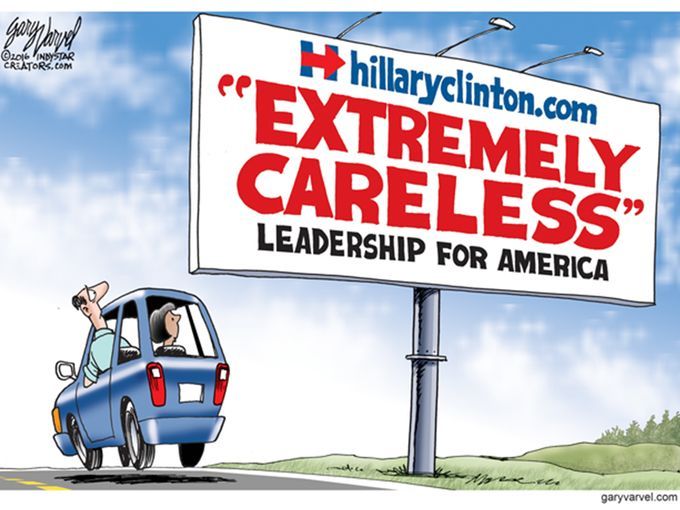
In the presidential campaign, Hillary Clinton has called for extensive gun safety measures, including a ban on the assault weapons favored by mass shooters, closing background-check loopholes, ending the gun industry’s outrageous protection from civil damage suits and denying guns to risky suspects on the government’s no-fly lists.
And once again the Orwellian Word Police have substituted “gun safety” for “gun control.” Is gun. Is not safe. That’s kinda the point. And the “gun industries outrageous protection from civil damage suits”? You mean the kind of suits that resulted in dismissals like Cincinnati’s lawsuit against Beretta where the decision reads in part:
A manufacturer has no duty to warn of an obvious danger. Knives are sharp, bowling balls are heavy, bullets cause puncture wounds in flesh. The law has long recognized that obvious dangers are an excluded class.
Those lawsuits weren’t seeking civil damages for defective firearms (suits which can still be brought and have been won.) The suits that manufacturers are protected against are the ones brought as “lawfare,” intending to bankrupt gun manufacturers competing against government entities with essentially bottomless pockets. Lawsuits that threaten to have far broader implications, as was noted in the dismissal of New York v. Sturm Ruger et. al:
Although this public nuisance lawsuit is brought by the Attorney General on behalf of the State of New York-while the Hamilton action was one initiated by private parties for negligent marketing-both were brought against handgun manufacturers and sellers. Plaintiff’s attempt here to widen the range of common-law public nuisance claims in order to reach the legal handgun industry will not itself, if successful, engender a limitless number of public nuisance lawsuits by individuals against these particular defendants, as was a stated concern in Hamilton, 96 N.Y.2d at 233, 727 N.Y.S.2d 7, 750 N.E.2d 1055. However, giving a green light to a common-law public nuisance cause of action today will, in our judgment, likely open the courthouse doors to a flood of limitless, similar theories of public nuisance, not only against these defendants, but also against a wide and varied array of other commercial and manufacturing enterprises and activities.
All a creative mind would need to do is construct a scenario describing a known or perceived harm of a sort that can somehow be said to relate back to the way a company or an industry makes, markets and/or sells its non-defective, lawful product or service, and a public nuisance claim would be conceived and a lawsuit born. A variety of such lawsuits would leave the starting gate to be welcomed into the legal arena to run their cumbersome course, their vast cost and tenuous reasoning notwithstanding. Indeed, such lawsuits employed to address a host of societal problems would be invited into the courthouse whether the problems they target are real or perceived; whether the problems are in some way caused by, or perhaps merely preceded by, the defendants’ completely lawful business practices; regardless of the remoteness of their actual cause or of their foreseeability; and regardless of the existence, remoteness, nature and extent of any intervening causes between defendants’ lawful commercial conduct and the alleged harm.
But the New York Times‘ Editoral Board doesn’t want you to know that, either.
Assault weapons? Someone once described the idea of banning “assault weapons” as a method of preventing mass shootings as the equivalent of banning palm trees to prevent people being crushed by falling elephants. The New York Times itself published a piece two years ago entitled The Assault Weapon Myth which noted:
This politically defined category of guns — a selection of rifles, shotguns and handguns with “military-style” features — only figured in about 2 percent of gun crimes nationwide before the ban.
—
Most Americans do not know that gun homicides have decreased by 49 percent since 1993 as violent crime also fell, though rates of gun homicide in the United States are still much higher than those in other developed nations. A Pew survey conducted after the mass shooting at Sandy Hook Elementary School in Newtown, Conn., found that 56 percent of Americans believed wrongly that the rate of gun crime was higher than it was 20 years ago.
—
“We spent a whole bunch of time and a whole bunch of political capital yelling and screaming about assault weapons,” Mayor Mitchell J. Landrieu of New Orleans said. He called it a “zero sum political fight about a symbolic weapon.”
—
More than 20 years of research funded by the Justice Department has found that programs to target high-risk people or places, rather than targeting certain kinds of guns, can reduce gun violence.
I guess the Editorial Board of the New York Times doesn’t actually read their own paper.
This is my shocked face.
The current op-ed concludes:
Donald Trump, endorsed by the National Rifle Association, favors more armed civilians ready to engage in what he calls a defensive “shootout.” This is one of the most pathetic measures yet of his pandering, when he should be leading, on an issue of vital importance to the public.
Except the public seems to feel otherwise, at least according to polls by Gallup, CNN, Pew and Rasmussen.
But the New York Times’ Editorial Board knows better.
At least they want you to think they do.
From Ace of Spades by way of Instapundit, here’s an interesting Moment of Zen. As Ace said, “Watch to the End. It gets good.”
[youtube https://www.youtube.com/watch?v=d6l0lp26X4E?rel=0&showinfo=0]
Yes. Yes it does.
One can but hope…

h/t Firehand
From a pretty important essay over at Claremont, The Flight 93 Election. It’s a fairly long piece (not überpost-length, but not 800 words, either) so this excerpt will be too:
One of the Journal of American Greatness’s deeper arguments was that only in a corrupt republic, in corrupt times, could a Trump rise. It is therefore puzzling that those most horrified by Trump are the least willing to consider the possibility that the republic is dying. That possibility, apparently, seems to them so preposterous that no refutation is necessary.
As does, presumably, the argument that the stakes in 2016 are—everything. I should here note that I am a good deal gloomier than my (former) JAG colleagues, and that while we frequently used the royal “we” when discussing things on which we all agreed, I here speak only for myself.
How have the last two decades worked out for you, personally? If you’re a member or fellow-traveler of the Davos class, chances are: pretty well. If you’re among the subspecies conservative intellectual or politician, you’ve accepted—perhaps not consciously, but unmistakably—your status on the roster of the Washington Generals of American politics. Your job is to show up and lose, but you are a necessary part of the show and you do get paid. To the extent that you are ever on the winning side of anything, it’s as sophists who help the Davoisie oligarchy rationalize open borders, lower wages, outsourcing, de-industrialization, trade giveaways, and endless, pointless, winless war.
All of Trump’s 16 Republican competitors would have ensured more of the same—as will the election of Hillary Clinton. That would be bad enough. But at least Republicans are merely reactive when it comes to wholesale cultural and political change. Their “opposition” may be in all cases ineffectual and often indistinguishable from support. But they don’t dream up inanities like 32 “genders,” elective bathrooms, single-payer, Iran sycophancy, “Islamophobia,” and Black Lives Matter. They merely help ratify them.
A Hillary presidency will be pedal-to-the-metal on the entire Progressive-left agenda, plus items few of us have yet imagined in our darkest moments. Nor is even that the worst. It will be coupled with a level of vindictive persecution against resistance and dissent hitherto seen in the supposedly liberal West only in the most “advanced” Scandinavian countries and the most leftist corners of Germany and England. We see this already in the censorship practiced by the Davoisie’s social media enablers; in the shameless propaganda tidal wave of the mainstream media; and in the personal destruction campaigns—operated through the former and aided by the latter—of the Social Justice Warriors. We see it in Obama’s flagrant use of the IRS to torment political opponents, the gaslighting denial by the media, and the collective shrug by everyone else.
It’s absurd to assume that any of this would stop or slow—would do anything other than massively intensify—in a Hillary administration. It’s even more ridiculous to expect that hitherto useless conservative opposition would suddenly become effective. For two generations at least, the Left has been calling everyone to their right Nazis. This trend has accelerated exponentially in the last few years, helped along by some on the Right who really do seem to merit—and even relish—the label. There is nothing the modern conservative fears more than being called “racist,” so alt-right pocket Nazis are manna from heaven for the Left. But also wholly unnecessary: sauce for the goose. The Left was calling us Nazis long before any pro-Trumpers tweeted Holocaust denial memes. And how does one deal with a Nazi—that is, with an enemy one is convinced intends your destruction? You don’t compromise with him or leave him alone. You crush him.
So what do we have to lose by fighting back? Only our Washington Generals jerseys—and paychecks. But those are going away anyway. Among the many things the “Right” still doesn’t understand is that the Left has concluded that this particular show need no longer go on. They don’t think they need a foil anymore and would rather dispense with the whole bother of staging these phony contests in which each side ostensibly has a shot.
RTWT. Twice.
From the comment thread to Too Many Guns:
Also: Testing out the new Disqus embedded comment feature.
And I hope Roger Waters chokes on it.
Firehand of the blog Irons in the Fire posted this over on Facebook. I felt the need to share two Rabbis orthodox Jews (Haredim) known as The Gat Brothers (Gil and Arie) covering Pink Floyd’s Wish You Were Here and killing it:
[youtube https://www.youtube.com/watch?v=wUizlRzD5yo?rel=0&showinfo=0&vq=hd720]
Back in 2006 when I wrote The Other Side, I identified the base belief of our opposition:
…one blatant truth remains: There are too many guns.
And this, ladies and gentlemen, is what every single one of us who believes in the right to arms must never forget:
The Other Side BELIEVES THIS. Absolutely. Without question.
It is their single article of faith.
And it is why we cannot trust them when they assure us that they “don’t want to take our guns away,” because if the “one blatant truth” is that there are “too many guns,” then the only answer is to reduce the number of guns.
This is simple logic.
If the single tenet of the gun control faith is that there are too many guns, the end purpose of “gun control” must be to eliminate them, or – at a minimum – reduce the number to some arbitrary “this is OK” level which I suspect must be significantly close to “nobody but the police and the military can have them” as to be indistinguishable from zero.
My favorite Merchant O’Death emailed me a link to an article in GQ Magazine, illuminatingly titled Inside the Federal Bureau Of Way Too Many Guns, a cri de coer for a computerized firearm registration system, a searchable database of all firearms records, period. Excerpt:
The National Tracing Center is not allowed to have centralized computer data.
“That’s the big no-no,” says Charlie.
That’s been a federal law, thanks to the NRA, since 1986: No searchable database of America’s gun owners.
And THAT is reason enough for me to be a paying member of the National Rifle Association.
Now, I’m FASCINATED by the emphasis that is placed on high-profile shootings mentioned in the article:
The San Bernardino case was an urgent. The Boston Marathon bomber case was an urgent. Gabby Giffords: urgent. Charleston. Aurora. Fort Hood. Columbine. Washington Navy Yard. Sikh temple. Just figure every crime you ever watched endless horrifying footage of on TV involved somebody here in Martinsburg searching through a rat’s nest of records and then experiencing a moment of jubilance upon seeing that, yes, this is it, here is the 4473 that belongs to that lunatic. (Or his mother. Or his uncle. Or the pawnshop dealer who sold it to someone else. Tracing the gun beyond the initial point of purchase is on the cops.)
And:
“The day of the Newtown shooting,” Urrutia says, “I was the whole day here. A day and a half. When I sleep? I slept here.”
That’s the one I hear most about. Everyone I meet eventually wants to tell me what that day in 2012 was like.
“Newtown was traumatic,” Charlie tells me. “People were bawling and tracing and bawling. Everybody’s going, ‘Oh, my God, somebody’s done what? It’s a kindergarten class? Who, what, how many?’ There’s confusion. We start to get a little bit of stuff. Everybody’s jumping around, waiting for anything they can get. We gotta get this, you know, right? We gotta do something, we gotta do something, we gotta do something. C’mon, c’mon, let us, give us a chance, right? Put us in. You know? Give us, give us—give us a way to contribute. Let us do our part. Because that’s, you know, that’s what I get out of this whole thing.
But what did tracing the firearms really do for “solving” those crimes? Damned little. In the San Bernardino case it got them a possible accomplice, that’s all. The article notes:
Sixty-five percent of the time, workers at the tracing center are able to successfully trace a gun used in a crime back to the original purchaser.
What is curiously not mentioned is the fact that the original purchaser may have sold it on, or had it stolen, and the trail goes dry there. No metric for that event is given. In fact, no mention is made at all of private gun sales. The closest the author gets is:
Just figure every crime you ever watched endless horrifying footage of on TV involved somebody here in Martinsburg searching through a rat’s nest of records and then experiencing a moment of jubilance upon seeing that, yes, this is it, here is the 4473 that belongs to that lunatic. (Or his mother. Or his uncle. Or the pawnshop dealer who sold it to someone else. Tracing the gun beyond the initial point of purchase is on the cops.)
But that paragraph is followed by this:
This is the maddening, inefficient way gun tracing works, and there is no effort afoot to make it work any better. For all the talking we do about imposing new limits on assault weapons, or stronger background checks, nobody talks about fixing the way we keep track—or don’t keep track—of where all the guns are.
Of course, the “gun lobby’s” concerns are poo-poohed:
The NRA, which, in the words of its CEO, Wayne LaPierre, regards the ATF as “jackbooted government thugs,” demands that Congress keep an eye on things.
“Hitler and Stalin, like every dictator who perpetrated genocide during the 20th century, assiduously confiscated guns before starting the genocide,” wrote gun-rights activist Dave Kopel in a recent NRA publication.
“Registration. Confiscation. Extinction. Each step makes the next step much easier.”
None of which has anything to do with what actually happens here. People here are trying to help cops on the street nab bad guys. “We are a factory producing investigative leads,” says Charlie. That is the point of the place in its entirety, despite anybody’s worry.
“They say, ‘They’ve centralized the records. We’re comin’!’ ” Charlie says. “Checking all different angles. ‘Are you keeping—you know, how are you keeping information? Are you collecting information you shouldn’t be? Are you accessing information you shouldn’t have access to? Has the computer world at the tracing center gone too far? We might need to back you off a little bit.’
“You go, ‘Back us off? Back us off?’”
Now this part was interesting:
On just one of the days I visited the tracing center, there were 5,000 trace requests in the hopper awaiting attention. There would be about a thousand more the next day.
In 2013, recognizing how important tracing is for solving crimes, and for providing intelligence regarding patterns of illegal gun trafficking, President Obama asked for more of it: He signed a memorandum demanding that all firearms recovered in the course of criminal investigations be traced.
But Congress didn’t give Charlie any funds, or manpower, to accommodate an influx. In fact, his budget has been flat since 2005.
No, Obama gave the trace center a pile of make-work so it looked like he was “tough on crime.” Instead he threw a monkey wrench into a system that doesn’t work all that well to begin with, and so media outlets could once again paint the NRA as the boogeyman.
This is all part of the Gun Control Trifecta – a “Universal Background Check” – so that all (legal) transfers have to involve a Form 4473. A computerized national registration system so that, after a few years, the government has a list of most of the (legal) gun owners out there, and at least most of what they own, all done without instituting a Canadian style registration system (which failed, as you’ll recall). Once registration has reached an acceptable threshold, then they can do something about “the number of guns.”
After all, the one blatant truth remains: There are too many guns.
Oh my god. It’s TEN YEARS OLD.
If you’re unfamiliar with it, IMNSHO this blog post at Unqualified Offerings – and the accompanying comment thread – is the best thing EVAR in the Blogosphere – Blog.
Warning, don’t start reading this if you have to get up early tomorrow. The comment thread is 1,104 posts long.
And it’s not the best just because my comment ended the thread, either.