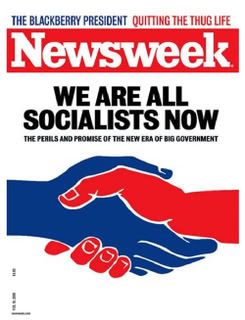
Part (No pun intended.)
This is the third post with the same title I’ve written here at TSM. The first was in 2004, a reflection on a Steven Den Beste essay, The Civil War. Excerpt:
Steven Den Beste has a piece on “What prevents another Civil War?”
Steven has two answers: The first, sort of flippantly, the U.S. Army. The second, the fact that we as citizens no longer see our loyalty as being primarily toward our State but toward our Nation (unless you’re a fringe leftist, in which case your loyalties are towards some nebulous “world government” currently represented by the corrupt UN.)
There’s more to it than that, though. With the advent of easy high-speed travel, the State borders have no real meaning to us beyond what the tax rates look like, and the climate and scenery. State borders aren’t just unimportant, they are largely meaningless (unless you’re a Texan) to us in terms of loyalty.
But what happens when a large (but minority) portion of the population becomes convinced that the Federal government has abandoned the founding legal structure it supposedly “protects and defends?”
My answer at that time:
Our Constitutionally enumerated and protected individual rights are under constant legal assault under the aegis of the War on Crime, the War on Drugs, and the War on Terror, and all three branches of the government are complicit. The media – the unacknowledged Fourth Branch – largely is too.
What prevents another Civil War?
Thomas Jefferson predicted it long, long ago in his letter to William Smith concerning Shay’s Rebellion of 1787:
And can history produce an instance of a rebellion so honourably conducted? I say nothing of it’s motives. They were founded in ignorance, not wickedness. God forbid we should ever be 20 years without such a rebellion. The people cannot be all, & always, well informed. The past which is wrong will be discontented in proportion to the importance of the facts they misconceive; if they remain quiet under such misconceptions it is a lethargy, the forerunner of death to the public liberty.
And Jefferson was right, as we have seen. Jefferson continued, though:
We have had 13. states independant 11. years. There has been one rebellion. That comes to one rebellion in a century & a half for each state. What country before ever existed a century & half without a rebellion? & what country can preserve it’s liberties if their rulers are not warned from time to time that their people preserve the spirit of resistance? Let them take arms. The remedy is to set them right as to facts, pardon & pacify them. What signify a few lives lost in a century or two? The tree of liberty must be refreshed from time to time with the blood of patriots & tyrants. It is it’s natural manure.
Seems that Jefferson counciled a bit of revolution from time to time.
Libertarian pundit Claire Wolfe wrote a while back, “America’s at that awkward stage. It’s too late to work within the system, but too early to shoot the bastards.” Claire had it wrong. The time to shoot the bastards is early on. Now it’s too late.
What prevents another Civil War here isn’t the Army or the fact that we hold a higher loyalty to our Nation than to our State of residence, it’s ignorance and apathy.
The second piece by the same title came just last year, after the DHS released their report Rightwing Extremism: Current Economic and Political Climate Fueling Resurgence in Radicalization and Recruitment.
After listing off the groups that truly frighten those currently in power, I noted:
They missed the single biggest group out there: those of us who aren’t anti-government, we just want our elected and appointed officials to do what they swear to do upon taking their offices: uphold and defend The Constitution of the United States against all enemies, foreign or domestic. As one ARFCOMmer put it:
This “homeland” shit that suddenly started up in the last couple years pisses me off. It reeks of the “fatherland” and “motherland” propaganda shit our enemies used throughout the 20th century. The Nazi regime was “father” to the German people. The Soviet regime was “mother” to the Russian people.

This guy is our uncle and that’s as close as I want the fucker.
I don’t need the government to be my big brother, my parent, my nanny, or my caretaker. It needs to maintain public services (roads, etc.), maintain foreign relations and the military, keep the states from squabbling, and stay the fuck out of my life.
This desire, apparently, makes us “antigovernment rightwing extremists.”
So be it.
On May 11, National Review published an essay, The Constitution, at Last by Charles Kesler, a “professor of government at Claremont McKenna College” and Senior Fellow of the Claremont Institute. Excerpt:
Once upon a time, and not so long ago, American politics revolved around the Constitution. Until the New Deal, and in certain respects until the mid-1960s, almost every major U.S. political controversy involved, at its heart, a dispute over the interpretation of the Constitution and its principles. Both of the leading political parties eagerly took part in these debates, because the party system itself had been developed in the early 19th century to pit two contenders (occasionally more) against each other for the honor of being the more faithful guardian of the Constitution and Union. Even from today’s distance, it isn’t hard to recall the epic clashes that resulted: the disputes over the constitutionality of a national bank, internal improvements, the extension of slavery, the legality and propriety of secession, civil rights, the definition and limits of interstate commerce, liberty of contract, the constitutionality of the welfare state, the federal authority to desegregate schools, and many others.
What’s different today is that, although it still matters, the Constitution is no longer at the heart of our political debates. Today’s partisans compete to lead the country into a better, more hopeful future, to get the economy moving again, to solve our social problems, even to fundamentally transform the nation. But to live and govern in accordance with the Constitution is not the first item on anybody’s platform, though few would deny, after a moment’s surprise at the question, that of course keeping faith with the Constitution is on the program somewhere — maybe on page two or three.
—
For the most part, the Constitution’s diminishment was the work of modern liberalism, beginning in the progressive era and accelerating with the New Deal. Though the original Constitution has not disappeared entirely, it grows less and less relevant, or even legible, to our political class.
RTWT.
In the most recent issue of American Spectator, professor Angelo Codevilla authored his essay America’s Ruling Class — And the Perils of Revolution. Excerpt:
As over-leveraged investment houses began to fail in September 2008, the leaders of the Republican and Democratic parties, of major corporations, and opinion leaders stretching from the National Review magazine (and the Wall Street Journal) on the right to the Nation magazine on the left, agreed that spending some $700 billion to buy the investors’ “toxic assets” was the only alternative to the U.S. economy’s “systemic collapse.” In this, President George W. Bush and his would-be Republican successor John McCain agreed with the Democratic candidate, Barack Obama. Many, if not most, people around them also agreed upon the eventual commitment of some 10 trillion nonexistent dollars in ways unprecedented in America. They explained neither the difference between the assets’ nominal and real values, nor precisely why letting the market find the latter would collapse America. The public objected immediately, by margins of three or four to one.
When this majority discovered that virtually no one in a position of power in either party or with a national voice would take their objections seriously, that decisions about their money were being made in bipartisan backroom deals with interested parties, and that the laws on these matters were being voted by people who had not read them, the term “political class” came into use. Then, after those in power changed their plans from buying toxic assets to buying up equity in banks and major industries but refused to explain why, when they reasserted their right to decide ad hoc on these and so many other matters, supposing them to be beyond the general public’s understanding, the American people started referring to those in and around government as the “ruling class.” And in fact Republican and Democratic office holders and their retinues show a similar presumption to dominate and fewer differences in tastes, habits, opinions, and sources of income among one another than between both and the rest of the country. They think, look, and act as a class.
—
Our ruling class’s agenda is power for itself. While it stakes its claim through intellectual-moral pretense, it holds power by one of the oldest and most prosaic of means: patronage and promises thereof. Like left-wing parties always and everywhere, it is a “machine,” that is, based on providing tangible rewards to its members. Such parties often provide rank-and-file activists with modest livelihoods and enhance mightily the upper levels’ wealth. Because this is so, whatever else such parties might accomplish, they must feed the machine by transferring money or jobs or privileges — civic as well as economic — to the party’s clients, directly or indirectly. This, incidentally, is close to Aristotle’s view of democracy. Hence our ruling class’s standard approach to any and all matters, its solution to any and all problems, is to increase the power of the government — meaning of those who run it, meaning themselves, to profit those who pay with political support for privileged jobs, contracts, etc. Hence more power for the ruling class has been our ruling class’s solution not just for economic downturns and social ills but also for hurricanes and tornadoes, global cooling and global warming. A priori, one might wonder whether enriching and empowering individuals of a certain kind can make Americans kinder and gentler, much less control the weather. But there can be no doubt that such power and money makes Americans ever more dependent on those who wield it.
—
Laws and regulations nowadays are longer than ever because length is needed to specify how people will be treated unequally. For example, the health care bill of 2010 takes more than 2,700 pages to make sure not just that some states will be treated differently from others because their senators offered key political support, but more importantly to codify bargains between the government and various parts of the health care industry, state governments, and large employers about who would receive what benefits (e.g., public employee unions and auto workers) and who would pass what indirect taxes onto the general public. The financial regulation bill of 2010, far from setting univocal rules for the entire financial industry in few words, spends some 3,000 pages (at this writing) tilting the field exquisitely toward some and away from others. Even more significantly, these and other products of Democratic and Republican administrations and Congresses empower countless boards and commissions arbitrarily to protect some persons and companies, while ruining others. Thus in 2008 the Republican administration first bailed out Bear Stearns, then let Lehman Brothers sink in the ensuing panic, but then rescued Goldman Sachs by infusing cash into its principal debtor, AIG. Then, its Democratic successor used similarly naked discretionary power (and money appropriated for another purpose) to give major stakes in the auto industry to labor unions that support it. Nowadays, the members of our ruling class admit that they do not read the laws. They don’t have to. Because modern laws are primarily grants of discretion, all anybody has to know about them is whom they empower.
There’s plenty more and all worth your time, but on Friday, July 30, Investors Business Daily printed a very interesting op-ed by Ernest Christian and Gary Robbins. Christian was “a deputy assistant secretary of the Treasury in the Ford administration,” and Robbins “served at the Treasury Department in the Reagan administration.”
The title of their piece was, Will Washington’s Failures Lead to a Second American Revolution? Excerpt:
The Internet is a large-scale version of the “Committees of Correspondence” that led to the first American Revolution — and with Washington’s failings now so obvious and awful, it may lead to another.
People are asking, “Is the government doing us more harm than good? Should we change what it does and the way it does it?”
Pruning the power of government begins with the imperial presidency.
Too many overreaching laws give the president too much discretion to make too many open-ended rules controlling too many aspects of our lives. There’s no end to the harm an out-of-control president can do.
Bill Clinton lowered the culture, moral tone and strength of the nation — and left America vulnerable to attack. When it came, George W. Bush stood up for America, albeit sometimes clumsily.
Barack Obama, however, has pulled off the ultimate switcheroo: He’s diminishing America from within — so far, successfully.
He may soon bankrupt us and replace our big merit-based capitalist economy with a small government-directed one of his own design.
He is undermining our constitutional traditions: The rule of law and our Anglo-Saxon concepts of private property hang in the balance. Obama may be the most “consequential” president ever.
The Wall Street Journal’s steadfast Dorothy Rabinowitz wrote that Barack Obama is “an alien in the White House.”
It goes on.
It would appear that ignorance and apathy are waning.
We’ve recently discovered that public-sector employees get better pay and benefits than equivalent private sector employees do. Reason.com predicts “war.” It very nearly came to that recently in Bell, California.
I’ve just started reading a book, 46 Pages: Thomas Paine, Common Sense, and the Turning Point to Independence by Scott Liell. Excerpt:
It had already been an unbearably hot summer, and the first week of July brought no relief. On the floor of the Philadelphia State House the delegates to the second Continental Congress were engaged in an equally heated debate on the subject of a declaration they were in the process of creating. The unfinished declaration was far from universally endorsed by the congressional delegates. There were significant differences as to exactly what to declare, what to demand, and what to threaten should those demands not be met. They were, however, agreed almost to a man about one important point. What the Congress as a whole would not contemplate — what they did not dare to declare, demand, or threaten — was independence.
The year was 1775, and the document the delegates would ultimately agree to on July 6 was the Declaration of Causes and Necessity of Taking up Arms. The purpose of this declaration was to justify before the world their armed resistance to the British Parliament’s attempt to enforce an absolute authority over the colonies. Close upon the heels of that primary objective, the document also showed a desire to define the limits of that resistance. The entire enterprise had been undertaken over the objections of a small but vocal minority in Congress, men such as John Adams who insisted that the time for such grovelling gestures had long since passed, but the climate in the colonies in the summer of 1775 was not right for such men or such ideas. The conciliatory declaration of July 6 was ultimately signed by all delegates, even Adams, as was a similarly styled petition directly to King George III ratified and signed two days later on July 8, 1775. This second document has come to be called the Olive Branch Petition, and that is what it truly was. Together, these documents represented a sincere if optimistic attempt by the second Continental Congress to lay out their grievances, describe the conditions that would have to precede the ultimate reconciliation they all expected and desired, and assure the crown of the still-strong bonds of affection and loyalty that would surely outlast these momentary quarrels.
—
In many ways these two documents offer an accurate snapshot of the second Continental Congress, and indeed of the colonial mood in general, one year before the Declaration of Independence. They reveal a people who increasingly believed that their way of life was under attack and that their traditional liberties were being eroded. At the same time, they felt that English law was on their side and even appealed to “their” constitution, the English constitution, to support that claim. The colonials saw the Parliament and the king’s ministers as their enemies, not George III himself. And they believed that, if conflict could not be avoided, it would be a civil war between disaffect segments of the British Empire, not a war for independence. For all their anger and perceived ill treatment, they saw themselves as British citizens living abroad, not as American citizens struggling against a foreign oppressor.
How is it, then, that one year later that same Congress, composed of most of the same delegates and representing the same colonies, could find itself so utterly changed?
In short, one 46-page pamphlet – Common Sense, which hit the bookstands January 10, 1776.
A while back in an open letter to Bill Whittle, I implored him to author the modern version of Common Sense. In the comments he declined. He promised great things were coming, but not that.
Too bad.
 (No pun intended.)