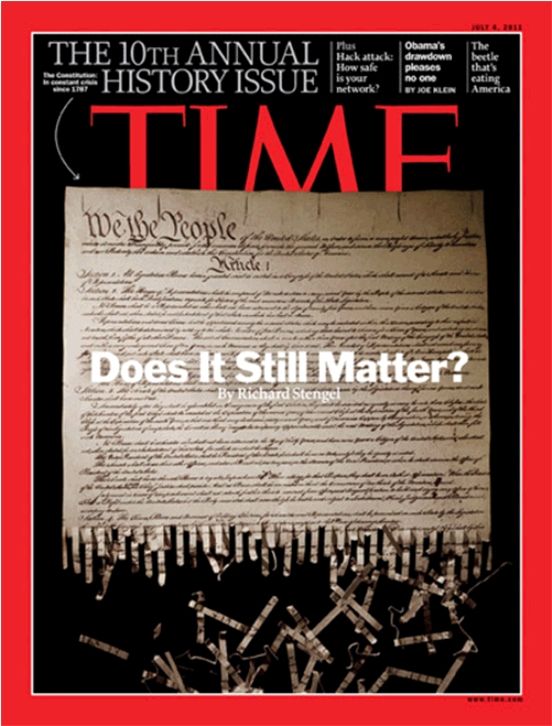
One year prior to the signing of the Declaration of Independence, the overwhelming majority of colonists considered themselves loyal subjects of the Crown, full British citizens with all the rights and privileges that citizenship entitled them to. Yes, there were problems with the way the Colonies were being administered, but these were largely misunderstandings and could be worked out.
One year later that attitude had changed. The colonies were ripe for rebellion. In honesty, not much had really changed in the way the Crown treated the colonies, the difference was that the ideology the colonists lived under had changed.
The cause of that change was Thomas Paine’s Common Sense, a 46-page pamphlet published January 10, 1776. In the first three months, 120,000 to 150,000 copies sold at 2 shillings each, the rough equivalent of $15 today. In the first year after its initial printing, 500,000 copies sold in a nation of only about 3 million people. By July, 1776 it had had its effect, and the colonists by and large no longer considered themselves Britons, but Americans.
In 1776 it is estimated that 90% of the population was literate – and not just literate, but at a fairly high level. I’ve quoted this before, but Thomas Sowell on literacy and education:
A recently reprinted memoir by Frederick Douglass (1818-1895) has footnotes explaining what words like “arraigned,” “curried” and “exculpate” meant, and explaining who Job was. In other words, this man who was born a slave and never went to school educated himself to the point where his words now have to be explained to today’s expensively under-educated generation.
There is really nothing very mysterious about why our public schools are failures. When you select the poorest quality college students to be public school teachers, give them iron-clad tenure, a captive audience, and pay them according to seniority rather than performance, why should the results be surprising?
Ours may become the first civilization destroyed, not by the power of our enemies, but by the ignorance of our teachers and the dangerous nonsense they are teaching our children. In an age of artificial intelligence, they are creating artificial stupidity.
In a democracy, we have always had to worry about the ignorance of the uneducated. Today we have to worry about the ignorance of people with college degrees.
An excerpt from Common Sense:
Society in every state is a blessing, but Government, even in its best state, is but a necessary evil; in its worst state an intolerable one: for when we suffer, or are exposed to the same miseries BY A GOVERNMENT, which we might expect in a country WITHOUT GOVERNMENT, our calamity is heightened by reflecting that we furnish the means by which we suffer. Government, like dress, is the badge of lost innocence; the palaces of kings are built upon the ruins of the bowers of paradise. For were the impulses of conscience clear, uniform and irresistibly obeyed, man would need no other lawgiver; but that not being the case, he finds it necessary to surrender up a part of his property to furnish means for the protection of the rest; and this he is induced to do by the same prudence which in every other case advises him, out of two evils to choose the least. Wherefore, security being the true design and end of government, it unanswerably follows that whatever form thereof appears most likely to ensure it to us, with the least expense and greatest benefit, is preferable to all others.
THAT is the expression of the minarchist, or “small-L” libertarian.
Back when I wrote True Believers, I quoted Glen Wishard from his Canis Iratus post, A Thumbnail History of the Twentieth Century:
The rise and fall of the Marxist ideal is rather neatly contained in the Twentieth Century, and comprises its central political phenomenon. Fascism and democratic defeatism are its sun-dogs. The common theme is politics as a theology of salvation, with a heroic transformation of the human condition (nothing less) promised to those who will agitate for it. Political activity becomes the highest human vocation. The various socialisms are only the most prominent manifestation of this delusion, which our future historian calls “politicism”. In all its forms, it defines human beings as exclusively political animals, based on characteristics which are largely or entirely beyond human control: ethnicity, nationality, gender, and social class. It claims universal relevance, and so divides the entire human race into heroes and enemies. To be on the correct side of this equation is considered full moral justification in and of itself, while no courtesy or concession can be afforded to those on the other. Therefore, politicism has no conscience whatsoever, no charity, and no mercy.
(Emphasis in original.) Other than disagreeing with Glen’s contention that the end of the Twentieth Century marked the fall of the Marxist ideal, I think his observation is spot-on – and it illustrates the polar opposite of the minarchist ideal espoused by Thomas Paine in which government is a necessary evil. I think proof that Glen’s thinking was wishful is easily illustrated by former Vice-President and nearly President Albert Gore’s contention that the purpose of Rule of Law was “human redemption,” or Barack Obama’s declaration that his election meant “fundamentally transforming the United States of America,” that the rise of the oceans would slow, and the planet would begin to heal upon his ascension. There are more, but those two scream for themselves.
The Nineteenth Century was a century of struggle between the old feudal, colonialist paradigm and the new individualist, capitalist, democratic one. Feudalism and colonialism lost. At the start of the Twentieth Century “the sun never set” on the British Empire. England had colonies in India, Asia, Africa. France in Southeast Asia and North Africa. Spain, Portugal, Holland, Germany and Italy all had colonies in Africa and Asia. South and Central America were overrun with colonies. And all of these polities were monarchies.
By the middle of the Twentieth Century, colonialism was over, and England, France, Spain, Portugal, the Netherlands, Italy and Germany were representative democracies of one form or another. England may still have a reigning Queen, but she has very little actual power.
But while the Nineteenth Century was a battle between the ideologies of monarchy and democracy, the Twentieth Century was a struggle between democracy and “politicism.” The outcome of the Ninteenth Century’s conflicts were not fully felt until the end of the Twentieth. The outcome of the Twentieth Century’s struggles, I think, will be felt much sooner. As with everything else, political change moves faster as time progresses.
As others have noted, Marx predicted that the proletariat would overthrow the capitalists in the industrialized world, but it didn’t happen. The question was “why?” and the conclusion was that capitalism made too many people comfortable. In order for the revolution to succeed, it would be necessary to change the culture of the people.
To change the culture as Thomas Paine had done in a few short months in 1776.
However, the ground in which Thomas Paine sowed his seeds of rebellion was already rich and prepared for his ideas. Near universal literacy. Exposure to and understanding of the philosophy of John Locke versus that of Thomas Hobbes. A firm faith in a Higher Power. That soil is not a good one in which to plant the seeds of politicism.
Politicism requires a different fertilizer mix. Ignorance. Illiteracy. Illogic. Envy. Dependency. Despair. Apathy.
To surrender completely to the control of others – either a secular government or a religious one – control that invades every waking action, requires people unwilling to do for themselves. The first step is and must be the destruction of education. People must be prevented from thinking for themselves, from reasoning. George Orwell explained it with “Newspeak” in his novel 1984:
NEWSPEAK was the official language of Oceania and had been devised to meet the ideological needs of Ingsoc, or English Socialism. In the year 1984 there was not as yet anyone who used Newspeak as his sole means of communication, either in speech or writing. The leading articles in the Times were written in it, but this was a tour de force which could only be carried out by a specialist. It was expected that Newspeak would have finally superseded Oldspeak (or Standard English, as we should call it) by about the year 2050. Meanwhile it gained ground steadily, all Party members tending to use Newspeak words and grammatical constructions more and more in their everyday speech. The version in use in 1984, and embodied in the Ninth and Tenth Editions of the Newspeak Dictionary, was a provisional one, and contained many superfluous words and archaic formations which were due to be suppressed later. It is with the final, perfected version, as embodied in the Eleventh Edition of the Dictionary, that we are concerned here.
The purpose of Newspeak was not only to provide a medium of expression for the world-view and mental habits proper to the devotees of Ingsoc, but to make all other modes of thought impossible. It was intended that when Newspeak had been adopted once and for all and Oldspeak forgotten, a heretical thought—that is, a thought diverging from the principles of Ingsoc—should be literally unthinkable, at least so far as thought is dependent on words. Its vocabulary was so constructed as to give exact and often very subtle expression to every meaning that a Party member could properly wish to express, while excluding all other meanings and also the possibility of arriving at them by indirect methods. This was done partly by the invention of new words, but chiefly by eliminating undesirable words and by stripping such words as remained of unorthodox meanings, and so far as possible of all secondary meanings whatever. To give a single example. The word free still existed in Newspeak, but it could only be used in such statements as ‘This dog is free from lice’ or ‘This field is free from weeds’. It could not be used in its old sense of ‘politically free’ or ‘intellectually free’ since political and intellectual freedom no longer existed even as concepts, and were therefore of necessity nameless. Quite apart from the suppression of definitely heretical words, reduction of vocabulary was regarded as an end in itself, and no word that could be dispensed with was allowed to survive. Newspeak was designed not to extend but to diminish the range of thought, and this purpose was indirectly assisted by cutting the choice of words down to a minimum.
That preparation started in the early years of the 20th Century. Thus today we have “politically correct” speech. With destruction of language skills comes the destruction of logic skills – if you can’t read, you can’t integrate ideas new to you. In fact, new ideas are gibberish – words that have no meaning. “Politically free” is a null value to someone planted in the fields of politicism. It’s a weed.
A free society requires an informed and virtuous citizenry.
“Free,” “informed” and “virtuous” have become null terms.
The 21st Century will be a century of struggle between freedom and politicism. Polticism has two competing versions – Marxist and Muslim. Freedom?
Null term.
When in the course of human events . . . .
Happy (In)Dependence Day.
UPDATE: Christiane Amanpour uses the word “perspicacious.” ABC has to edumacate its audience. At least the ones in the “dance of the low, sloping forehead” country.